August’s theme – the triquetra.

You know the symbol, you have seen it… Charmed “Power of three” anyone? Well – this month I won’t go down a rabbit hole of campy witch fan fiction. But instead I will look at the varied meanings and associations with this symbol.

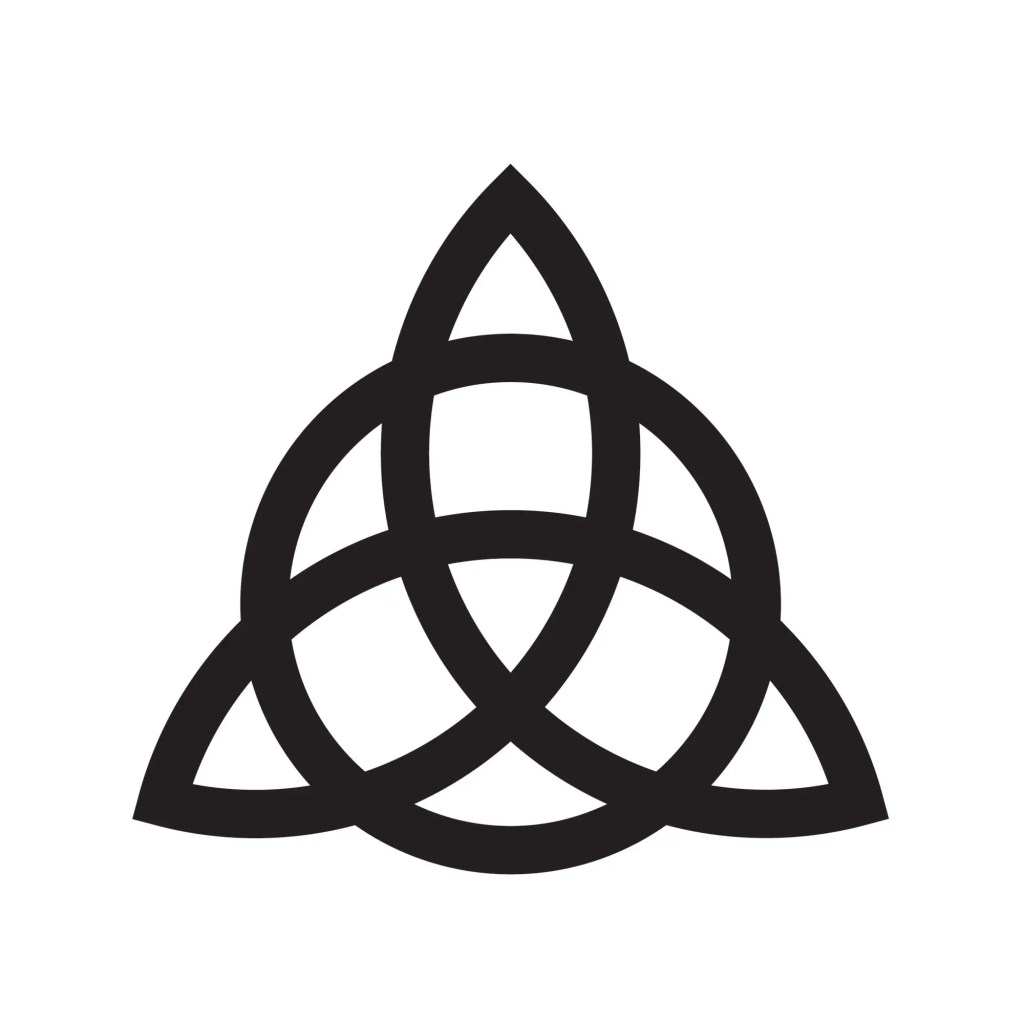
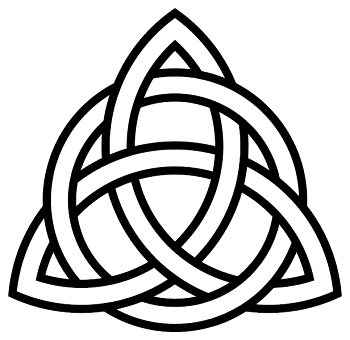
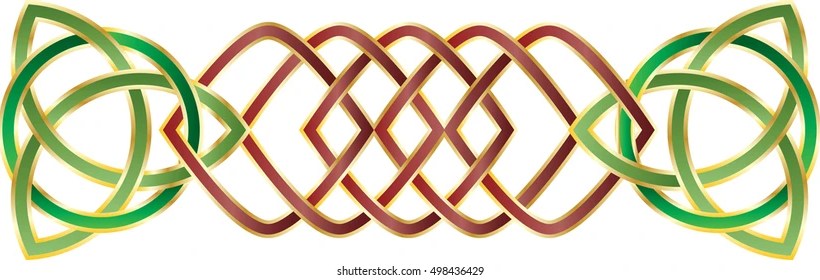
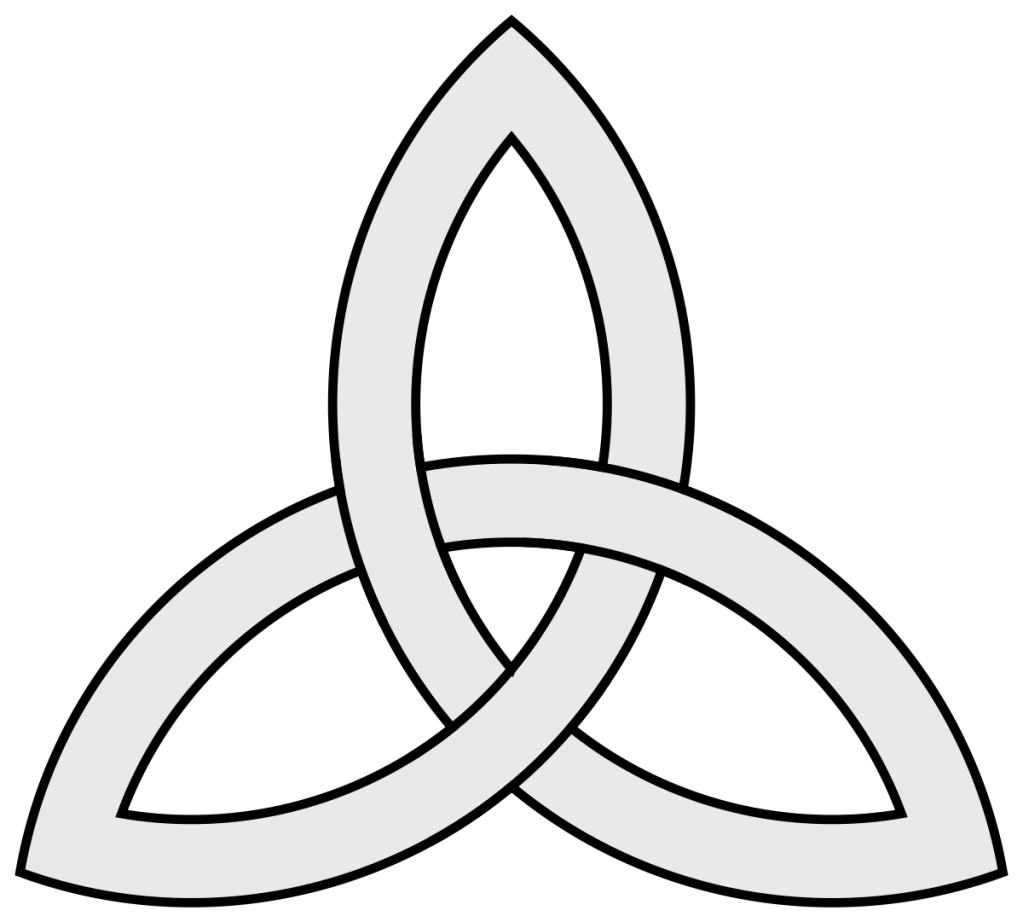
Triquetra: from the Latin adjective triquetrus “three-cornered”) – a triangular figure composed of three interlaced arcs, or (equivalently) three overlapping vesicae piscis lens shapes. It is used as an ornamental design in architecture, and in medieval manuscript illumination. Its depiction as interlaced is common in Insular ( Celtic) ornaments from about the 7th century. (Wiki)

Triquetra on one of the Funbo Runestones (11th century), located in the park of Uppsala University. Image credit: Wiglaf

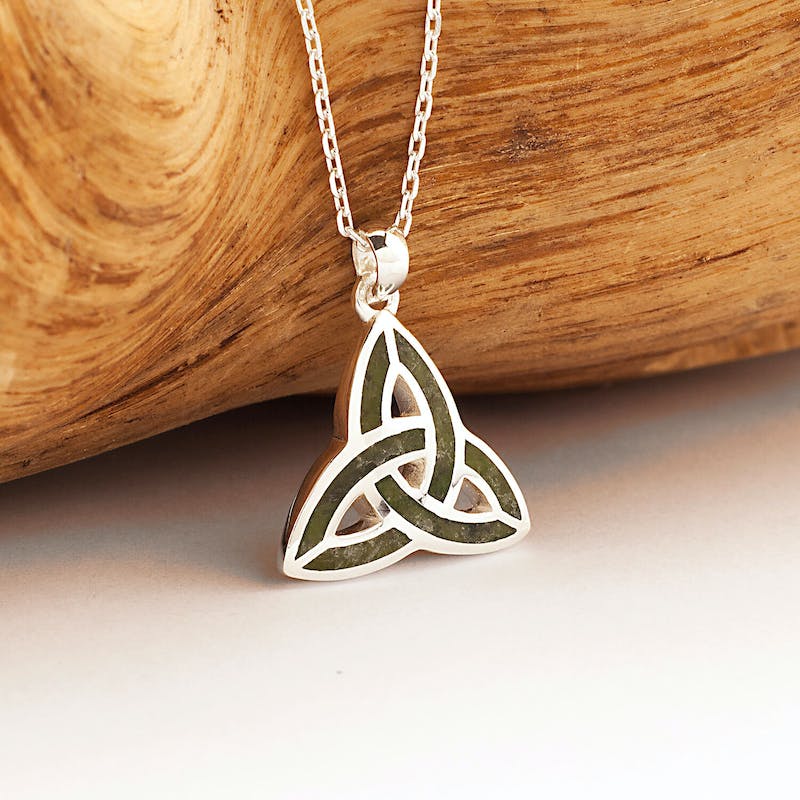
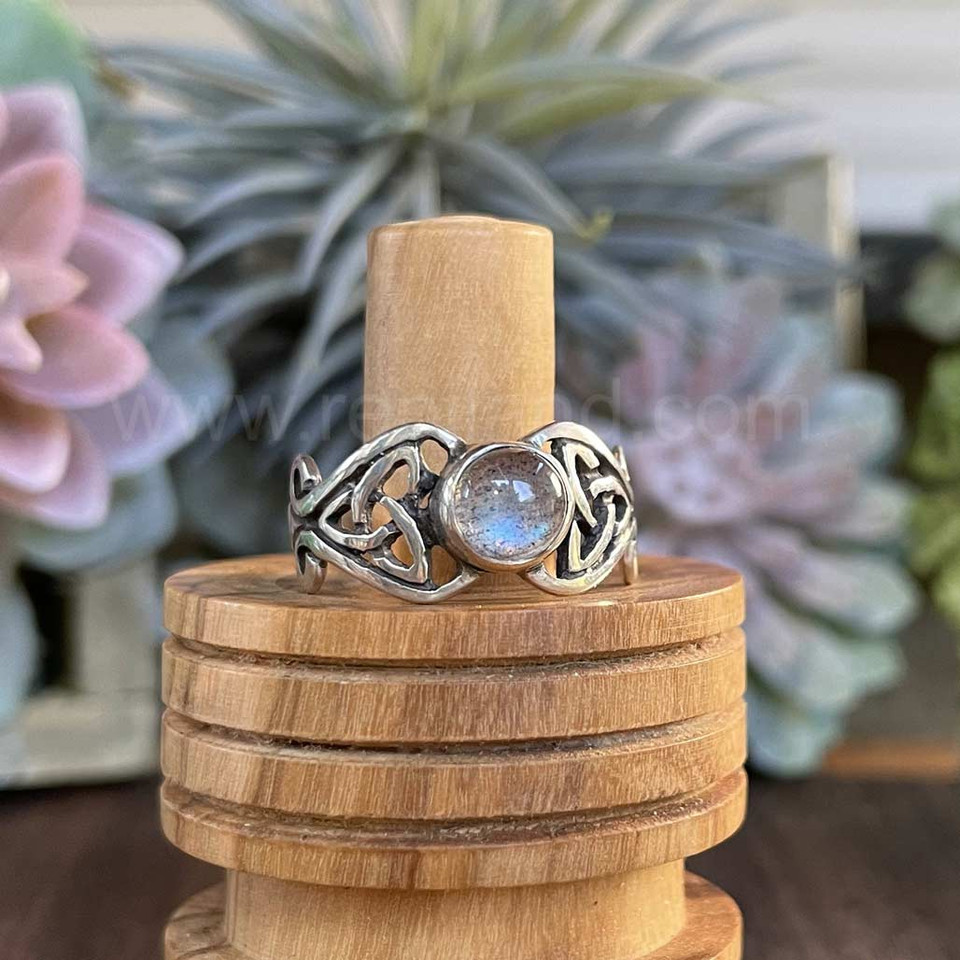
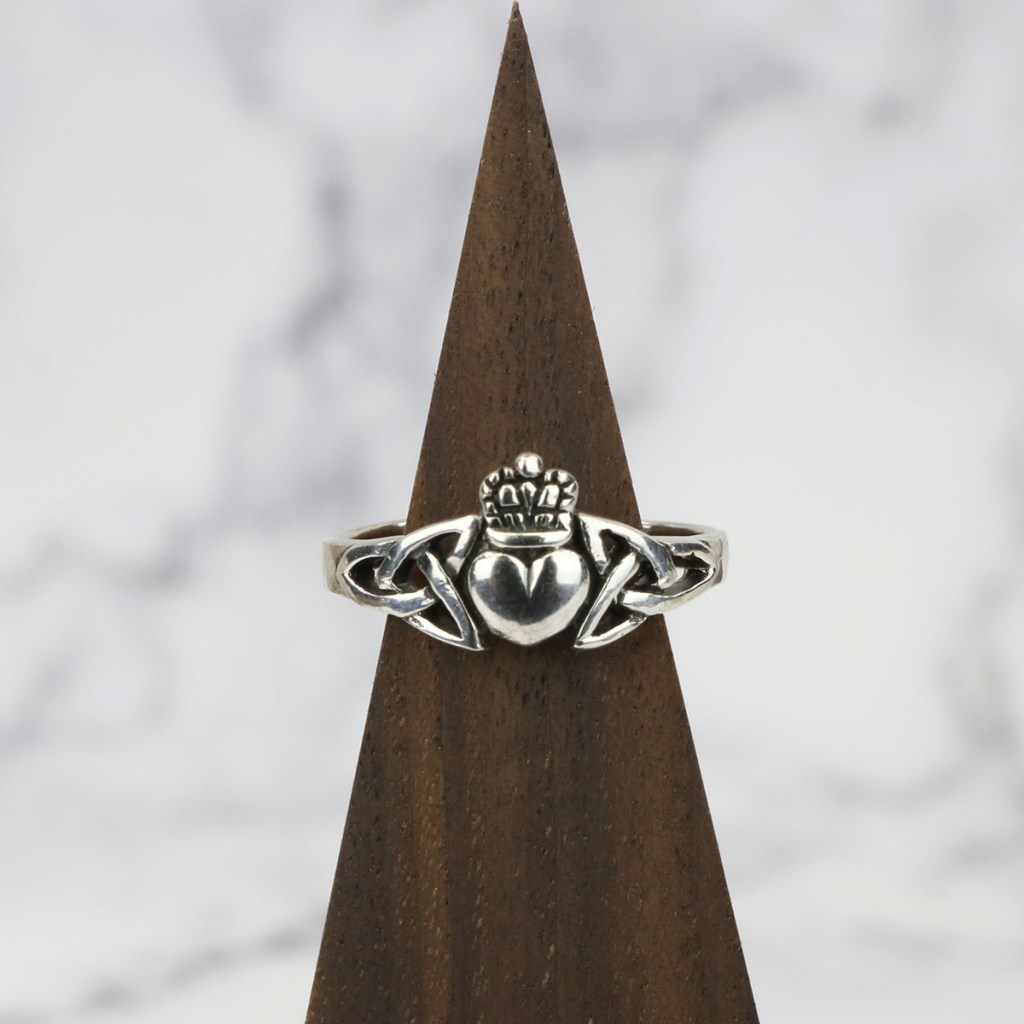
The triquetra is often used artistically as a design element when Celtic knotwork is used, especially in association with the modern Celtic Nations. The triquetra, also known as a “trinity knot”, is often found as a design element in popular Irish jewelry such as claddaghs and other wedding or engagement rings.
Due to its presence in insular Celtic art, Celtic Reconstructionalists use the triquetra either to represent one of the various triplicities in their cosmology and theology (such as the tripartite division of the world into the realms of Land, Sea and Sky), or as a symbol of one of the specific Celtic triple goddesses – for example the battle goddess, The Morrígan. The symbol is also sometimes used  to symbolise the Triple Goddess as Maiden/Mother/Crone or as a protective symbol.
So by its very nature – this symbol is a trinity. The Celts loved triads. They composed poetic triads, bridging like motifs in the myths. They referenced the three realms – land, sea and sky. Their belief system revolved around the cycles of life, death, and rebirth. They worshipped tripartite or triple goddesses… But its specific meaning to the Ancient Celts? We can make educated guesses.

As the Celtic peoples turned to Christianity – the triad came to symbolize the Father, Son and Holy Spirit. The Maiden/mother/crone triad is more modern, stemming from Robert Graves’ book “The White Goddess” – and is firmly established now! ( For more in depth information, here). Other triads: Mind, body, spirit as well as past. present, future.
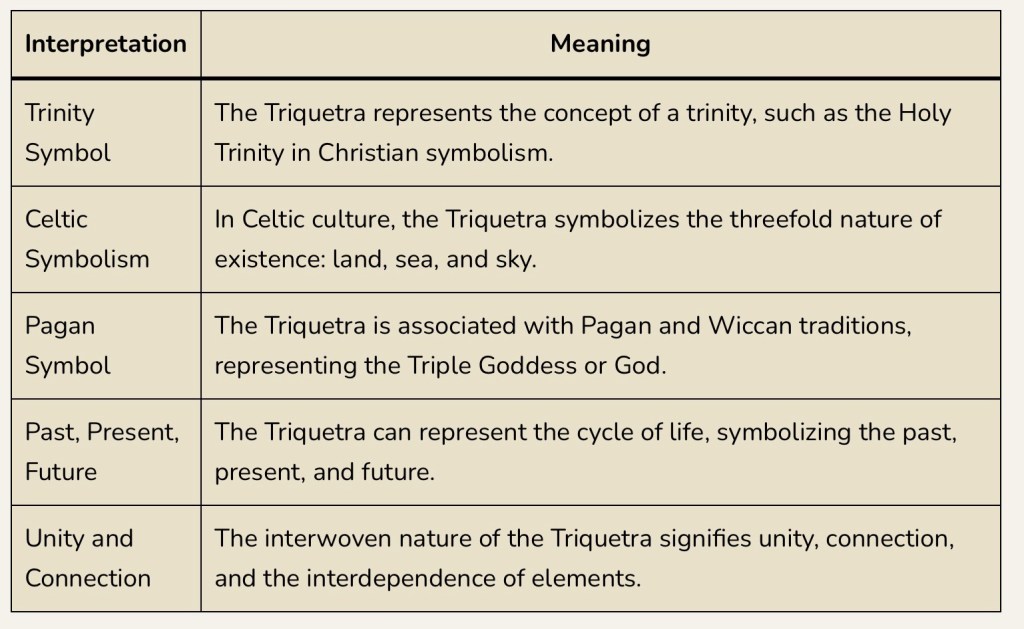
Image credit: Magickalspot.com

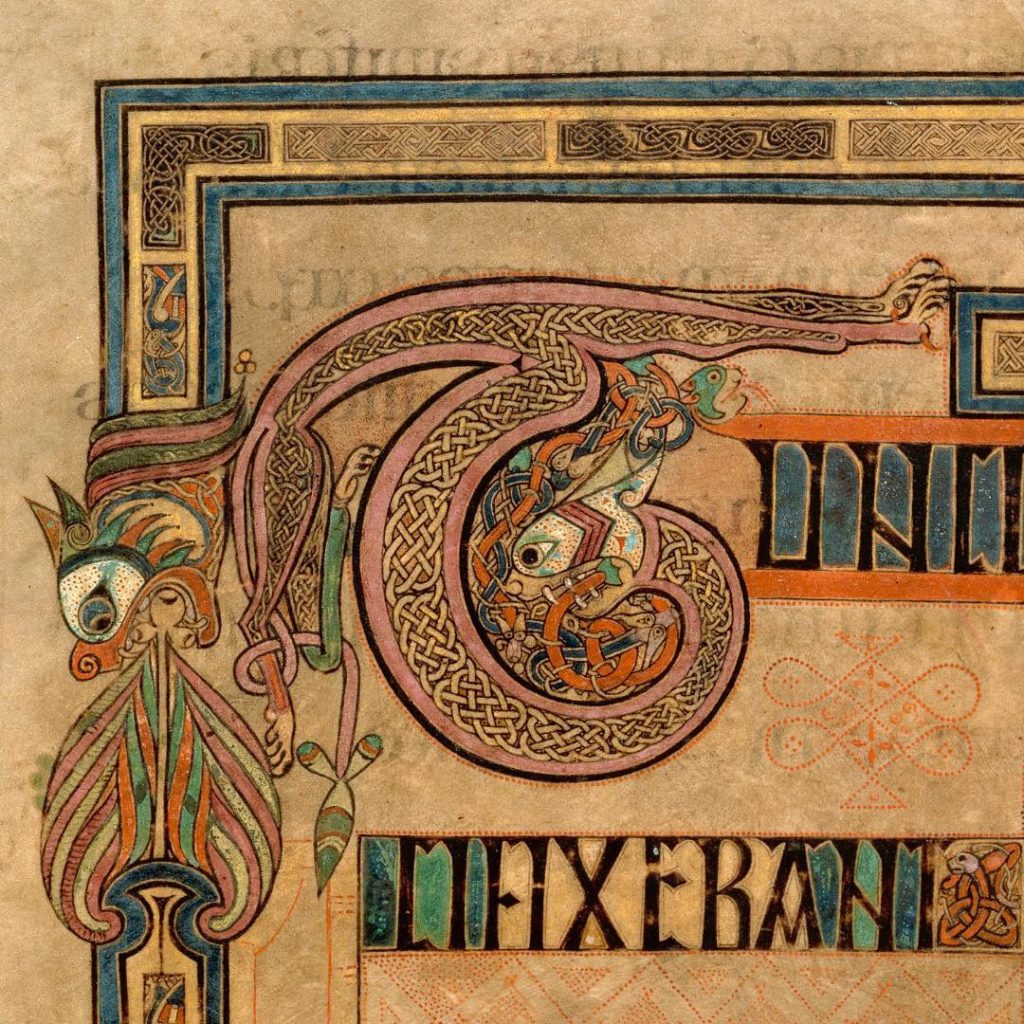
The triquetra is often shown as a pattern of knot work- one path, overlapping and weaving together. It is a simple form when you look at related knot work designs – like on the Book of Kells!
So I think this month may have a Celtic flavor, what do you think? It is already sparking ideas for me that I am eager to take to the page!

And I have added more resources and images on Pinterest! Check it out!

Are you a subscriber on You Tube? I would love to have you… and this theme will unfold during the month of July. My monthly theme inspired my filmed art journal pages. And anyone is welcome to use the theme and journal along !
Labyrinth – July’s theme

This month -another favorite theme. We focused on the labyrinth symbol as one of our motif’s in my initial SPARKing Creativity art journaling class. While the classes will be available again – hopefully this Fall – for know I wanted to share some of the information and resources from that lesson. May they inspire you for this month’s theme!

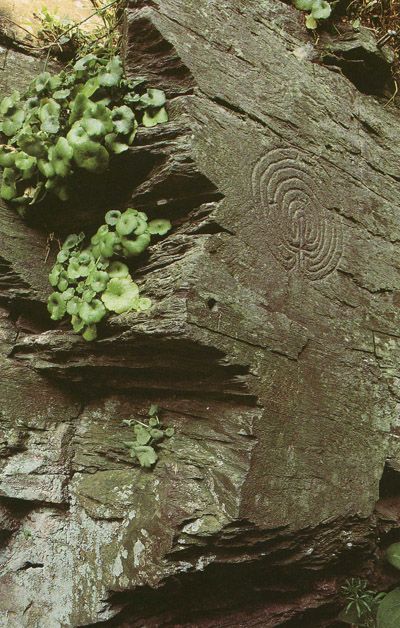
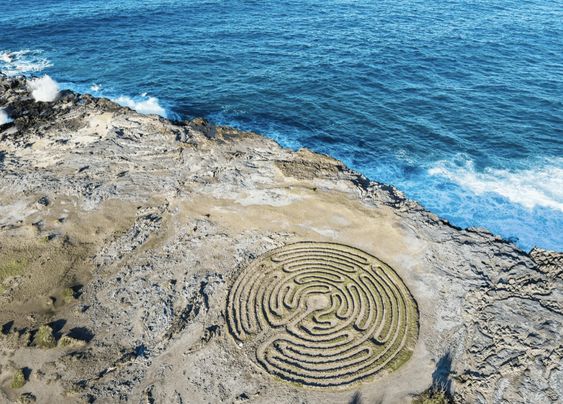
Clifftop Labyrinth in Cornwall. Article from the Guardian.

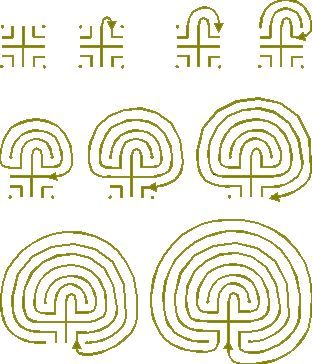
A labyrinth differs greatly from a maze. While a maze is filled with dead ends, paths to no where… it offers a challenge, a puzzle, and much back and forth. A labyrinth has ONE path – and that leads to the center. As you walk the labyrinth – you approach, and recede, and approach again in a rhythmic way before finally reaching the center. The path meanders, and can obscure your goal/center – but it will be attained if you remain on the path. 

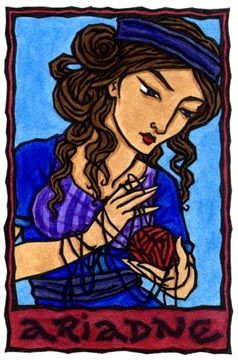
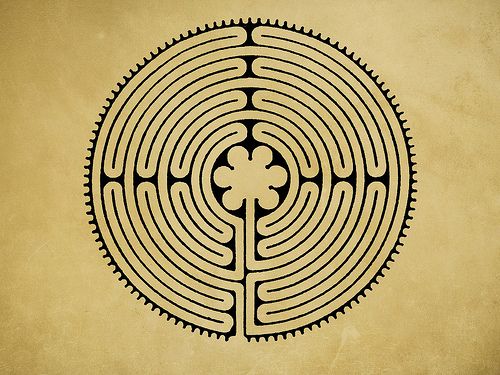
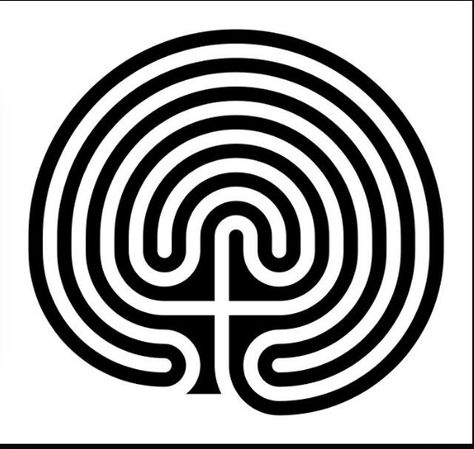
The Cretan labyrinth (pictured above) – the oldest recorded labyrinth connected to the myth of the Minotaur. Created by master inventor Daedelus at the command of King Minos; it housed the half man, half bull Minotaur. ( Born of the Queen in illicit union…) Theseus the princely hero is determined to kill the Minotaur and end the tribute Minos demands of  Athens. He is aided by Ariadne, who he cruelly betrays… You can read the tragic tale – here. 

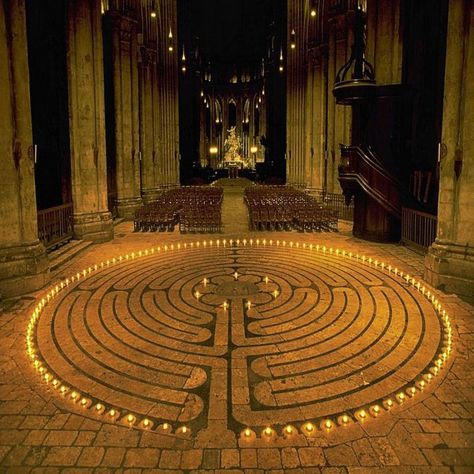
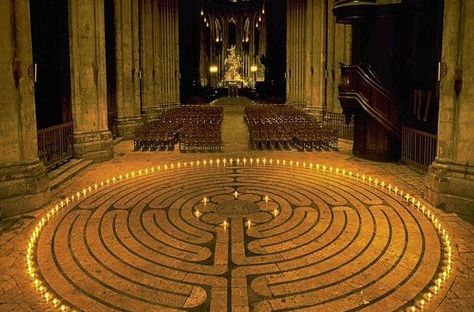
The Chartres labyrinth – Many Medieval cathedrals had stone labyrinths set in the floors. Chartres is so well known as it is still intact. These were used for devotional purposes and could serve as a substitute for a pilgrimage to the Holy Land. 

The Chartres labyrinth is 42’ in diameter. It may have been     connected to the Knights Templar traditions. The center has a rosette – roses being a symbol of the Virgin Mary – to whom Chartres is dedicated. The rosette can also symbolize the Holy Spirit, and it can be noted that the 6 petals correspond with the 6 days of Creation. Unique to the Charters style labyrinth are the 28 “lunations” on the outside edge. ( I cant help but think of the moon and women’s cycles that run app. 28 days as well.)

Dr. Lauren Artress has a phenomenal book “Walking a Sacred Path” – I highly recommend it if you are interested in learning more! She is also the leader of the modern labyrinth movement, starting with the Chartres style labyrinth located at Grace Cathedral in San Francisco. On her site “Veriditas” the labyrinth is described as: “The labyrinth is a walking meditation, a path of prayer and an archetypal blueprint where psyche meets Spirit. It has only one path that leads from the outer edge in a circuitous way to the center.There are no tricks to it and no dead ends. Unlike a maze where you lose your way, the labyrinth is a spiritual tool that can help you find your way.”

You can search the “World Wide Labyrinth Locator” for labyrinths to walk in your area!

A feature on labyrinths from the TODAY show – here.

Atlas Obscurer article – Chartres Cathedral’s labyrinth.

Bloomberg news feature on popularity of labyrinths post pandemic.

And I have added more resources and images on Pinterest! Check it out!

Are you a subscriber on You Tube? I would love to have you… and this theme will unfold during the month of July. My monthly theme inspired my filmed art journal pages. And anyone is welcome to use the theme and journal along !
Eye spy… May’s theme

To see clearly… to look within… eyes as the windows of the soul… fest your eyes, apple of your eye, cry your eyes out. Birds eye view, eyes in the back of your head, give someone the eye, catch someone’s eye… Public eye, Bull’s eye, Private eye…

The list goes on ad finitum. And that doesn’t evens tart with the famous quotes! ( Although I have added a few at the end of the post.) The topic this month is so versatile,and has such a rich history – I barely knew where to start. So Art history and myth it is!

First – a rabbit hole of research: Who actually said: “The eyes are window of the soul.”? The Internet will tell you everything from Shakespeare to the Bible. But I did find this at Idiomorigins.org :

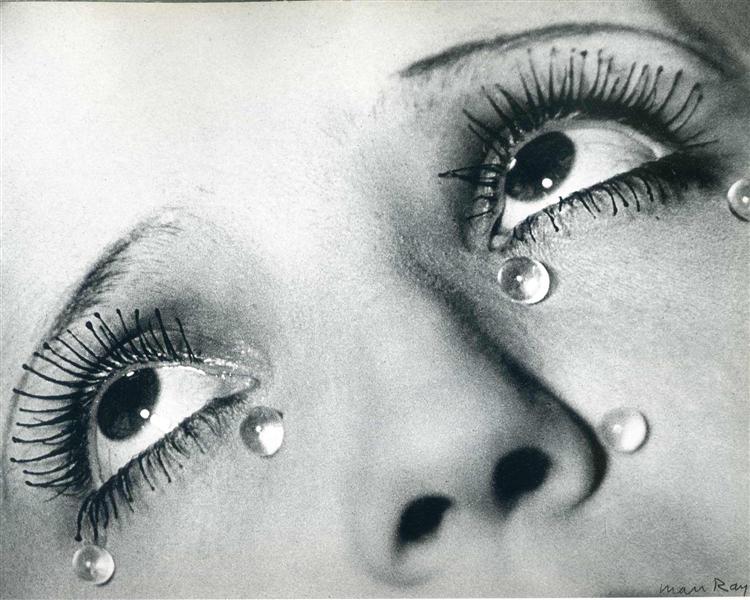
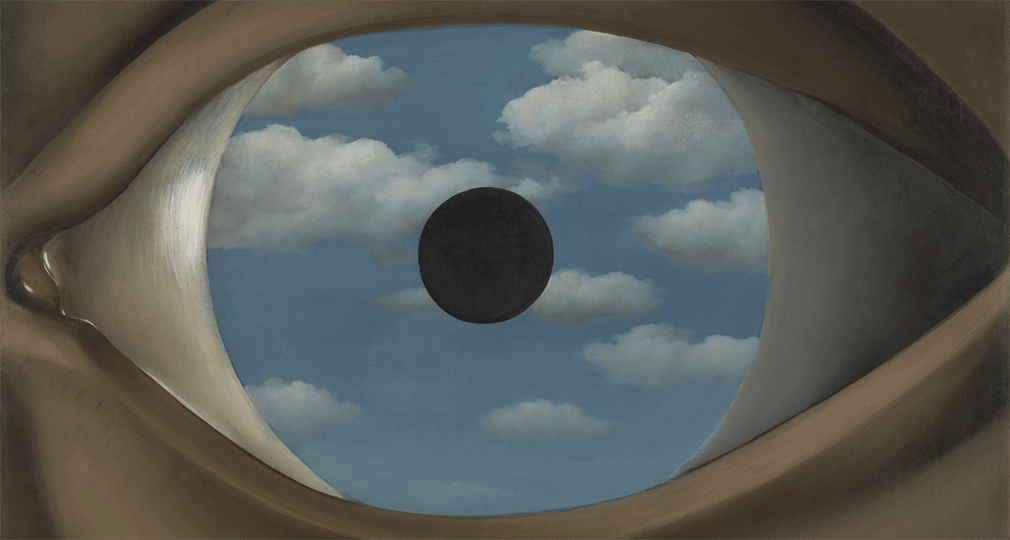
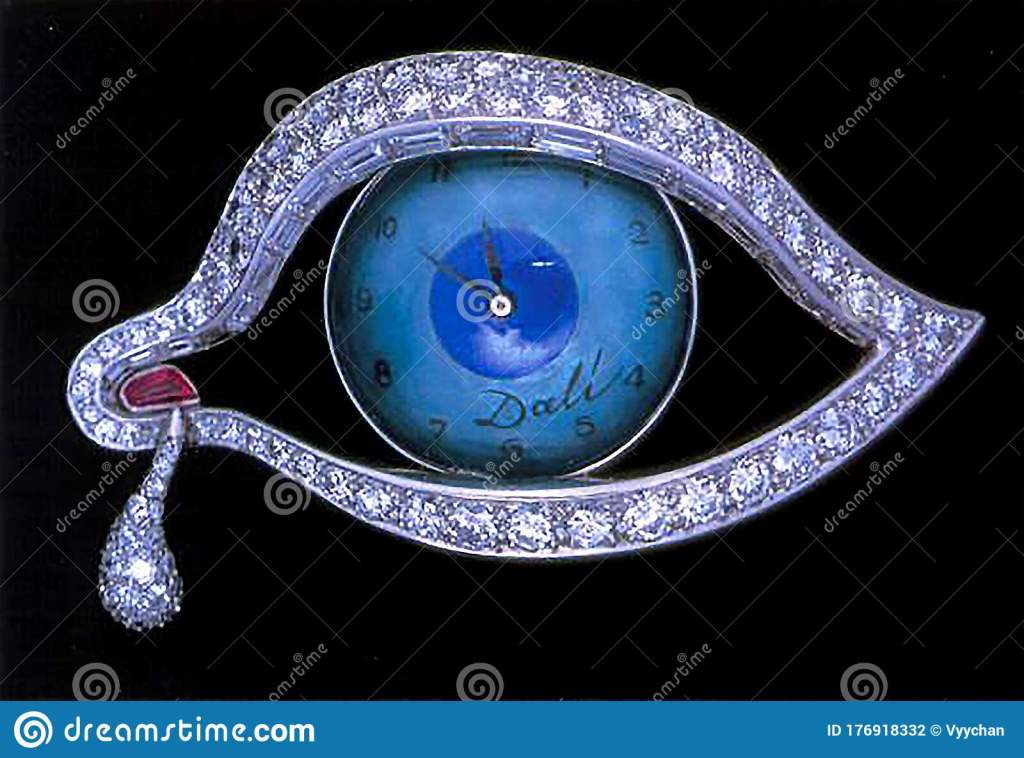
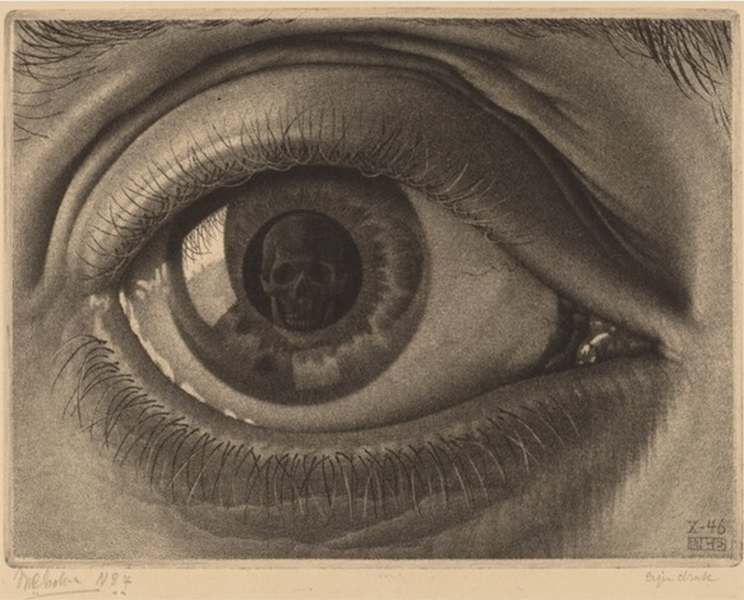
Let’s dive in with the Surrealists first, shall we? There are so many famous eyes that come to… my Mind’s eye! Here are a few!

Photo by Tom Podmore on Unsplash
  • The Nazar is the amulet/charm we often refer to as the Evil Eye – but it his meant to ward off that very thing! A nazar (from Arabic ‏نَظَر‎ [ˈnaðˤar], meaning ‘sight’, ‘surveillance’, ‘attention’, and other related concepts) is an eye-shaped amulet believed to protect against the evil eye.
  • A typical nazar is made of handmade glass featuring concentric circles or teardrop shapes in dark blue, white, light blue and black, occasionally with a yellow/gold edge. “The bead is made of a mixture of molten glassironcopperwater, and salt, ingredients that are thought to shield people from evil.”
  • “According to Turkish belief, blue acts as a shield against evil and even absorbs negativity.”[2] In the Middle East and the Mediterranean, “blue eyes are relatively rare, so the ancients believed that people with light eyes, particularly blue eyes, could curse you [one] with just one look. This belief is so ancient, even the Assyrians had turquoise and blue-eye amulets.”
  • Nazar battu (Hindustani: नज़र बट्टू or نظر بٹو) is an icon, charm bracelettattoo or other object or pattern used in North India and Pakistan to ward-off the evil eye (or nazar).[1] In Persian and Afghan folklore, it is called a cheshm nazar (Persian: چشم نظر) or nazar qurbāni (Persian: نظرقربانی).[2] In India and Pakistan, the Hindi-Urdu slogan of Persian origin Chashm-e-Baddoor(Persian: چشم بد دور) is used to ward off the evil eye. (Sources from Wiki)
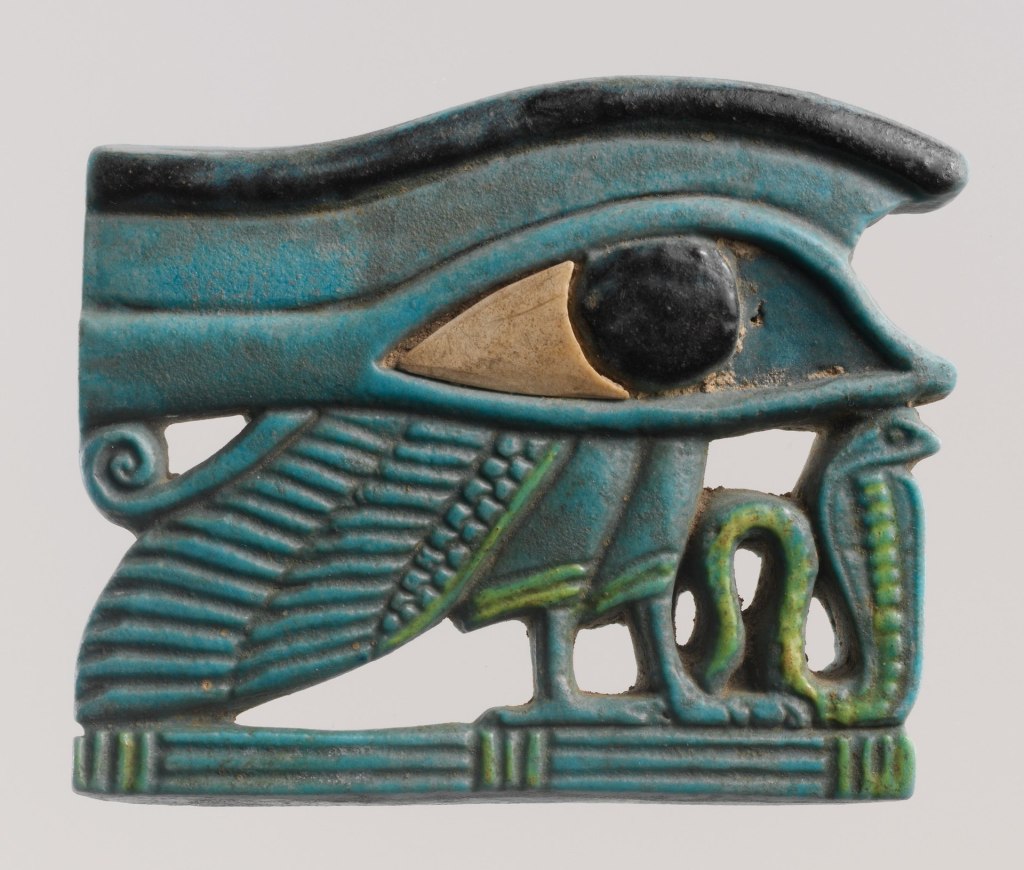
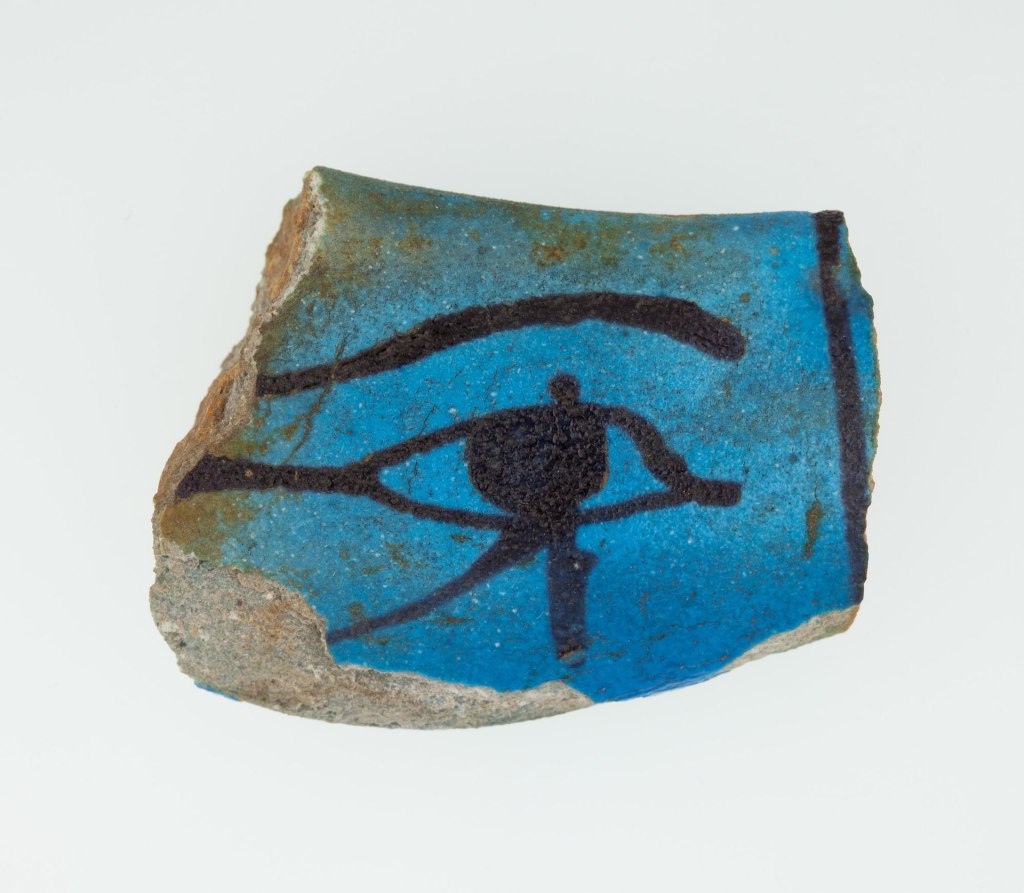
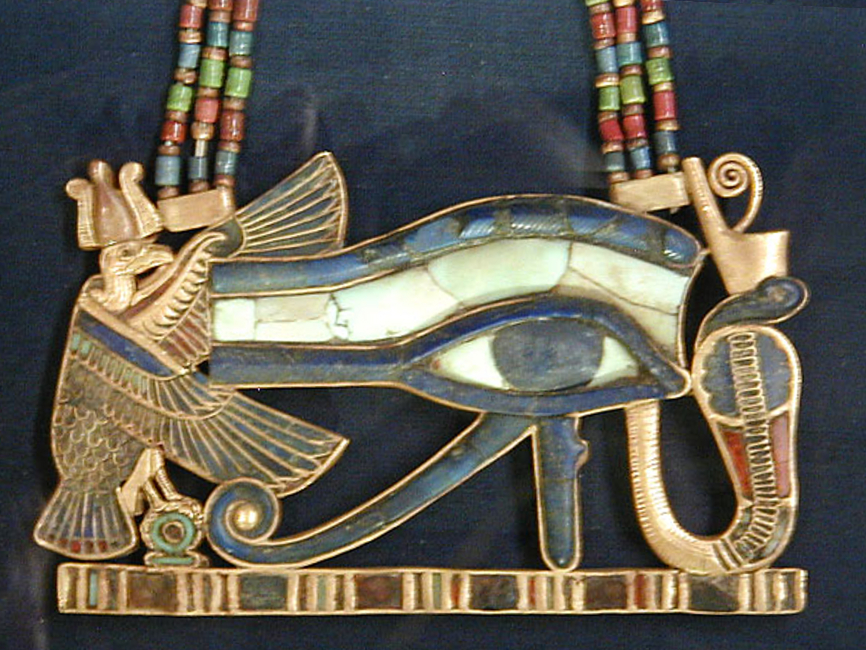
  • The Eye of Horuswedjat eye or udjat eye is a concept and symbol in ancient Egyptian religion that represents well-being, healing, and protection. It derives from the mythical conflict between the god Horus with his rival Set, in which Set tore out or destroyed one or both of Horus’s eyes and the eye was subsequently healed or returned to Horus with the assistance of another deity, such as Thoth. The stylized eye symbol was used interchangeably to represent the Eye of Ra. Egyptologists often simply refer to this symbol as the wedjat eye.
  • The Eye of Horus was equated with funerary offerings, as well as with all the offerings given to deities in temple ritual. It could also represent other concepts, such as the moon, whose waxing and waning was likened to the injury and restoration of the eye.
  • Horus was represented as a falcon, such as a lanner or peregrine falcon, or as a human with a falcon head. The Eye of Horus is a stylized human or falcon eye. The symbol often includes an eyebrow, a dark line extending behind the rear corner of the eye, a cheek marking below the center or forward corner of the eye, and a line extending below and toward the rear of the eye that ends in a curl or spiral. The cheek marking resembles that found on many falcons.

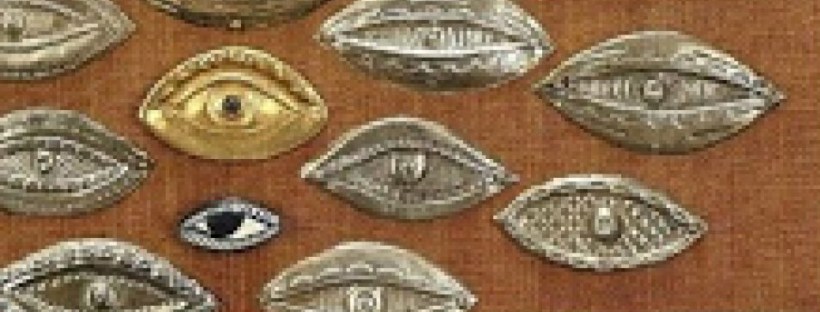
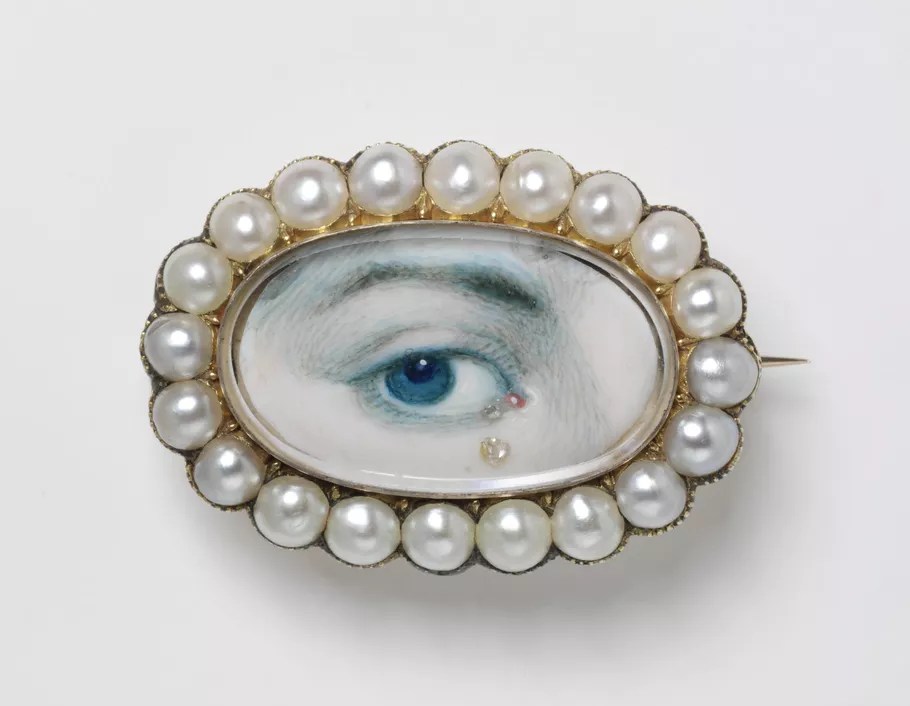
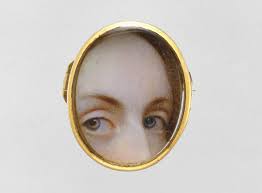
Eye miniatures, also known as lover’s eyes, cropped up across Britain around 1785 and were en vogue for shorter than half a century. As with the royal couple, most were commissioned as gifts expressing devotion between loved ones. Some, too, were painted in memory of the deceased. All were intimate and exceedingly precious: eyes painted on bits of ivory no bigger than a pinky nail, then set inside ruby-garlanded brooches, pearl-encrusted rings, or ornate golden charms meant to be tucked into pockets, or pinned close to the heart.

As objects, lover’s eyes are mesmerizing—and bizarre. Part-portrait, part-jewel, they resist easy categorization. They’re also steeped in mystery: In most cases, both the subject whose eye was depicted and the artist who painted it are unknown. What sparked their popularity? Why had they faded so quickly from use? And why portray a single eye, as opposed to a whole portrait? Whether they were meant to be secret, if the relationship was illicit; or just a steamy smoldering “for your eyes only” glance… they are exquisite miniatures! ( source: Artsy.com)

Further reading:

Quotes (from Brainy Quote)

  • “Eyes speak all languages…” R. W. Emerson
  • “When I know your soul, I will paint your eyes.” A. Modigliani
  • “Keep your eyes on the stars, and your feet on the ground.” T. Roosevelt
  • “The real voyage of discovery consists not in seeking new landscapes, but in having new eyes.” M. Proust
  • “He who can no longer pause to wonder and stand rapt in awe, is as good as dead; his eyes are closed.” A. Einstein

You hold the key – April’s theme

Unlock, reveal. Secrecy, privacy, gateways, portals, knowledge. Trust/Hide. Answers, freedom, escape, safety, closure. Initiation. Curiosity. Mystery. Goals, dreaming, yearning.

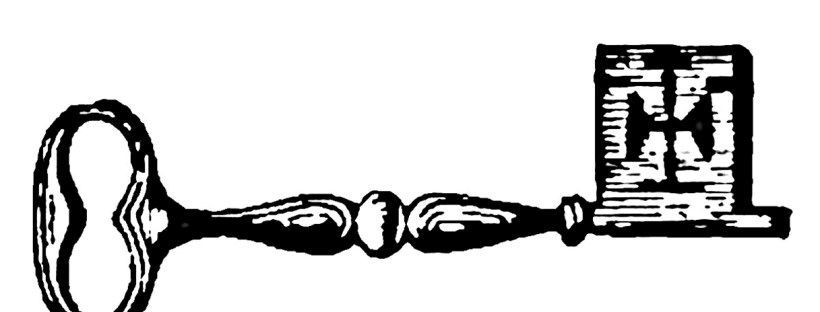
Keys to me are tangible potential. The magic and mystery of what could be unlocked; the revelations or mysteries contained from unworthy eyes.

In my intro art journaling class ” Sparking Creativity” we used Keys as one of our motifs: unlocking and opening up to the new process of art journaling. Using the art journal as a safe container to work through emotions and challenges.

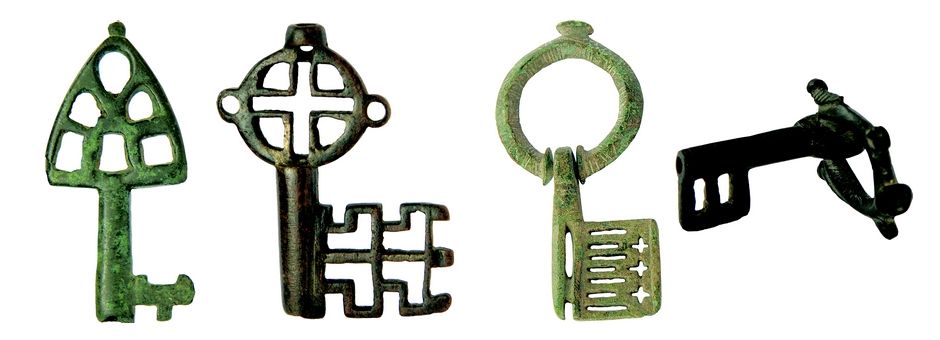
I wanted to share some of my mythical key inspiration with you this month – as I again use this image to inspire my pages this month.

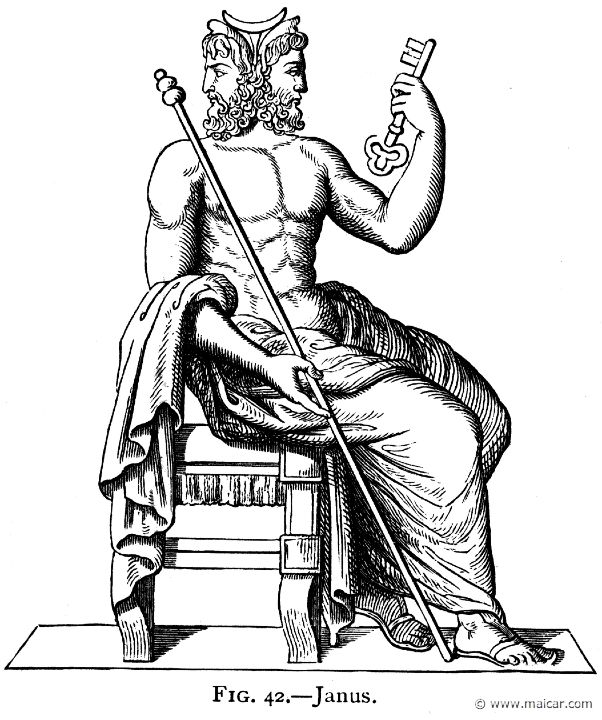
 Janus: Roman god of doors and gateways. Janus wore two faces – looking in 2 directions and looking backwards and forwards in time. He was a gatekeeper, and a god of beginnings. (January is named after Janus.) He is depicted with keys and a staff. He was said to represent wisdom, could grant success and new opportunities. 

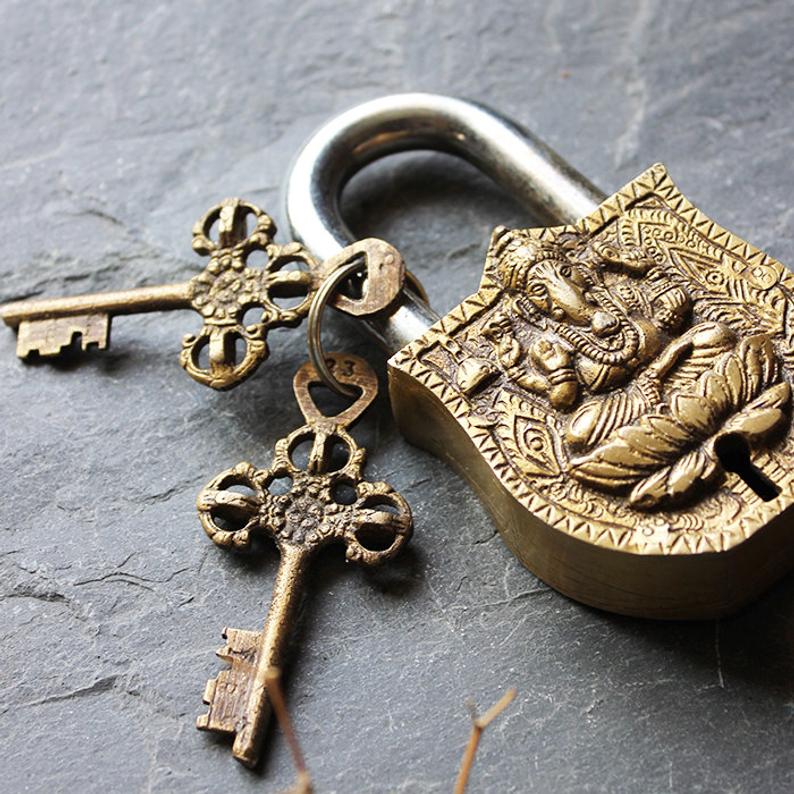
 Lord Ganesh in the Hindu spiritual path is the great elephant god, the mover of obstacles and for this reason very often associated with keys.  Commonly locks or keys can be found with a Ganesh design on it to symbolically representing the unlocking of a path or knowledge.  Ganesh is associated with wisdom and spiritual knowledge, making him not only a prime example of key symbolism but also a deity, like so many others, associated with journeying.

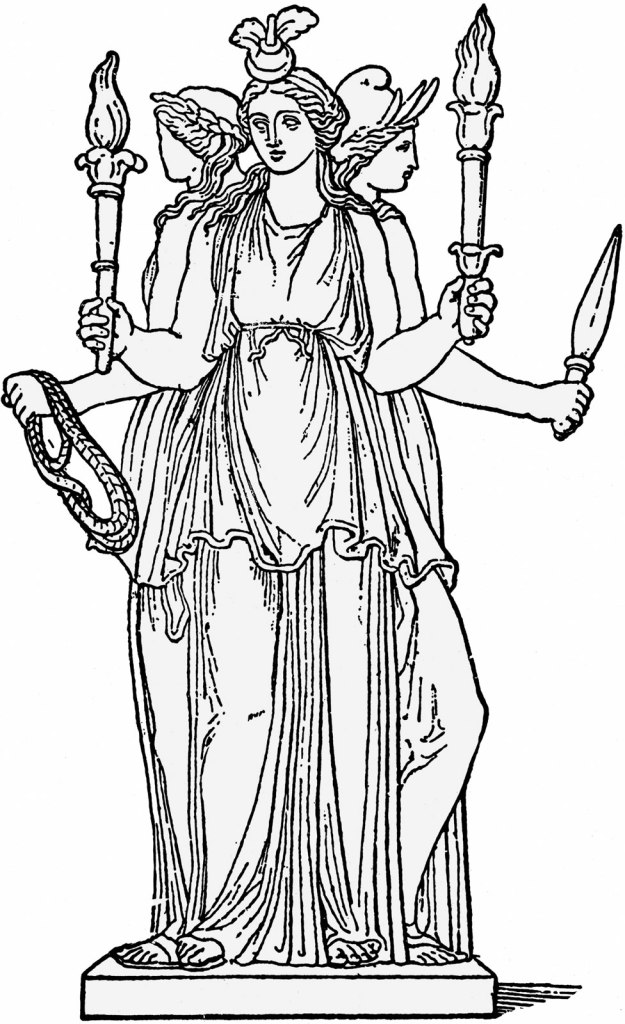
 Hecate is a Greek goddess associated with was the goddess of magic, witchcraft, the night, moon, crossroads. She is often called The Queen of the Witches, and The Keeper of Keys. She holds the keys that allow passage into the spiritual realm.  She is a great protector and is associated with keys, and dogs among other things. Trivia is the Roman equivalent of the Greek Hecate, goddess of the three-way crossroads.

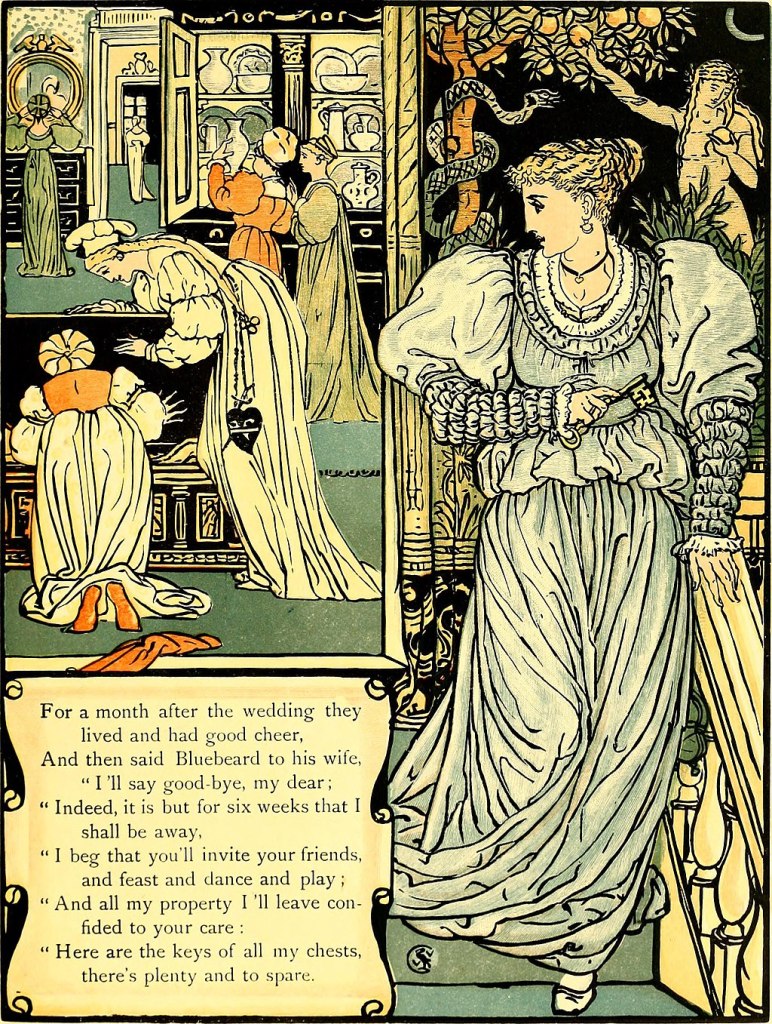
But some of the most fascinating and even gruesome keys are linked with folk tales and modern retelling, constantly morphing and yet connected at heart. The Grimm’s told the tale of the Fitcher’s Bird ( also read the tale here) Charles Perrault used Bluebeard as his nefarious character in his version. To Angela Carter it is the Bloody Chamber. They all have in common: a secret room, off limits. Keys and curiosity! Leading to trouble… sometimes with eggs, often with blood stains. Take a read for yourself – they are amazing tales!

“The wife holds the key” illustration by Walter Crane.

Are you a subscriber on You Tube? I would love to have you… and this theme will unfold during the month of April. My monthly theme inspired my filmed art journal pages. And anyone is welcome to use the theme and journal along !
Please stay tuned on my You Tube channel for these art journal pages as they unfold during the month of April!

Spiral in, spiral out… February’s theme

Growth. Creation. Evolution. Change. Pathways. Cycles. Fertility. Intuition. Change. Nature. Balance. Centering. Expansion.

  • From the Latin: “Spirare” to breathe
  • From the Greek: “speira” – coil. “Helix” – spiral shaped.

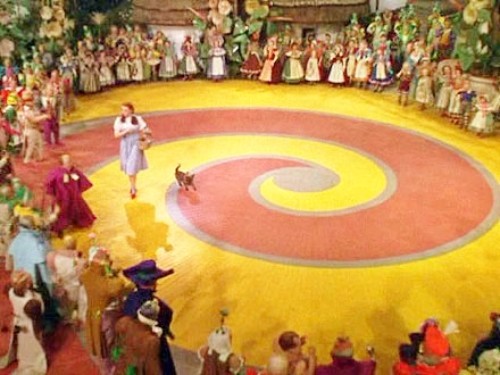
The spiral is one of my favorite motifs and symbols. It is what I doodle in the margins. It is what I add an an element when a piece needs “something”. To me its the path, the journey, the flow. Whether you are spiraling outward, always seeking and evolving, growing and becoming… Or spiraling inwards – to your core, your center, your truest self. Finding deep knowledge within…

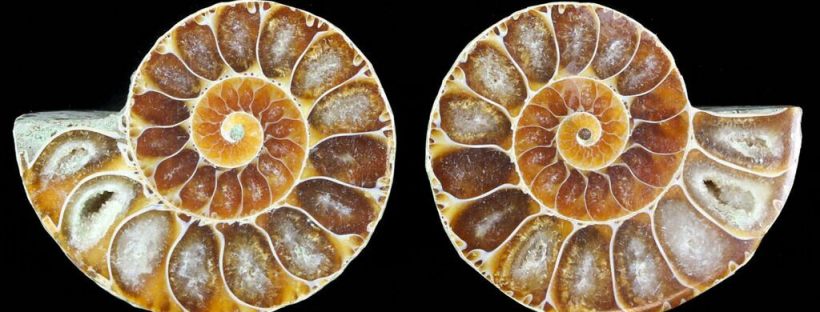
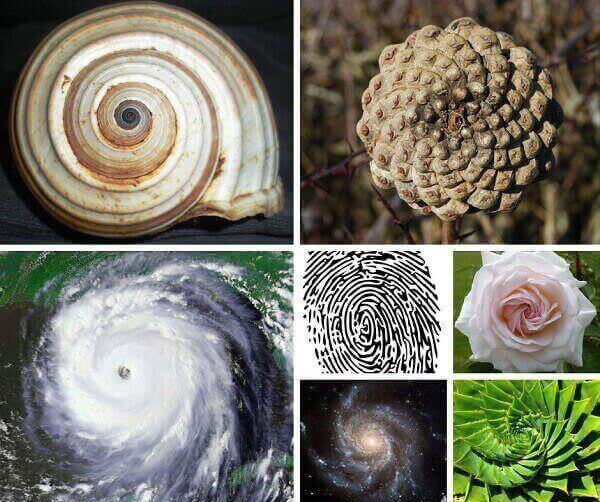
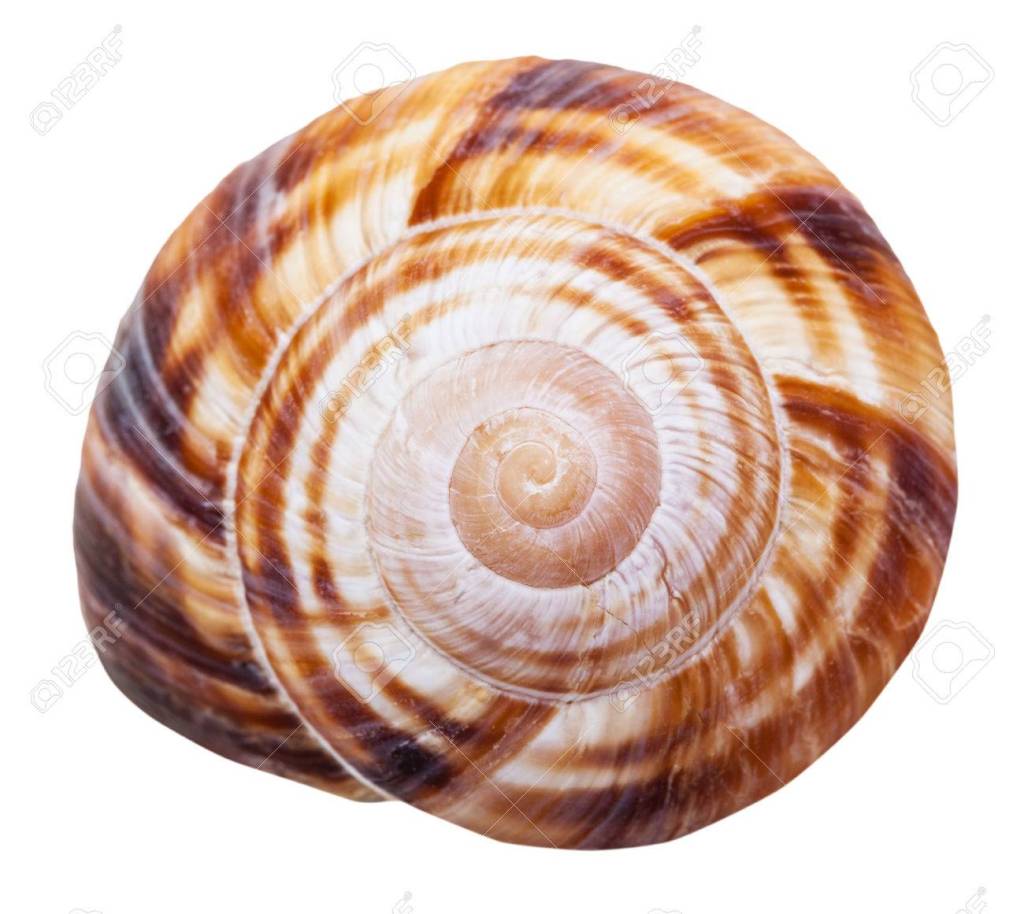
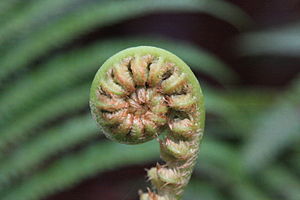
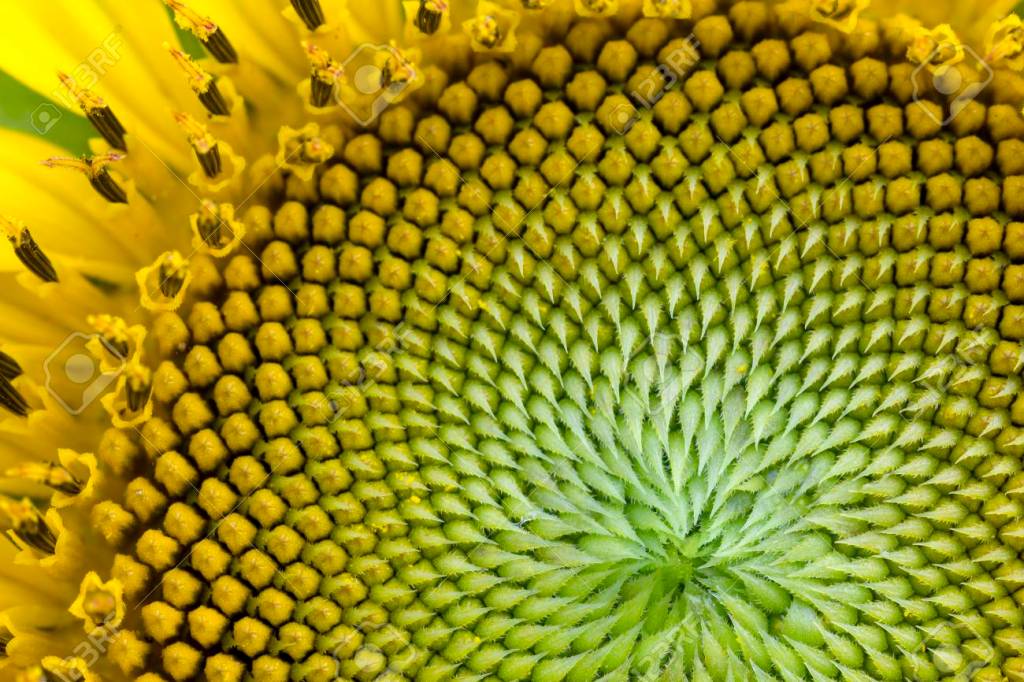
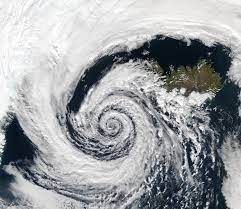
The spiral is a structure that occurs in myriad ways in nature. From our double stranded DNA helix, to galaxies and storm patterns, shells, ferns, flowers…

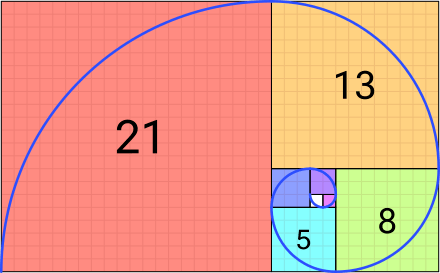
In mathematics, the Fibonacci numbers, commonly denoted Fn , form a sequence, the Fibonacci sequence, in which each number is the sum of the two preceding ones. The sequence commonly starts from 0 and 1, although some authors start the sequence from 1 and 1 or sometimes (as did Fibonacci) from 1 and 2. Starting from 0 and 1, the first few values in the sequence are:[1]0, 1, 1, 2, 3, 5, 8, 13, 21, 34, 55, 89, 144.

The Fibonacci numbers were first described in Indian mathematics, as early as 200 BC in work by Pingala on enumerating possible patterns of Sanskrit poetry formed from syllables of two lengths. They are named after the Italian mathematician Leonardo of Pisa, later known as Fibonacci, who introduced the sequence to Western European mathematics in his 1202 book Liber Abaci. ( Thank you Wiki)

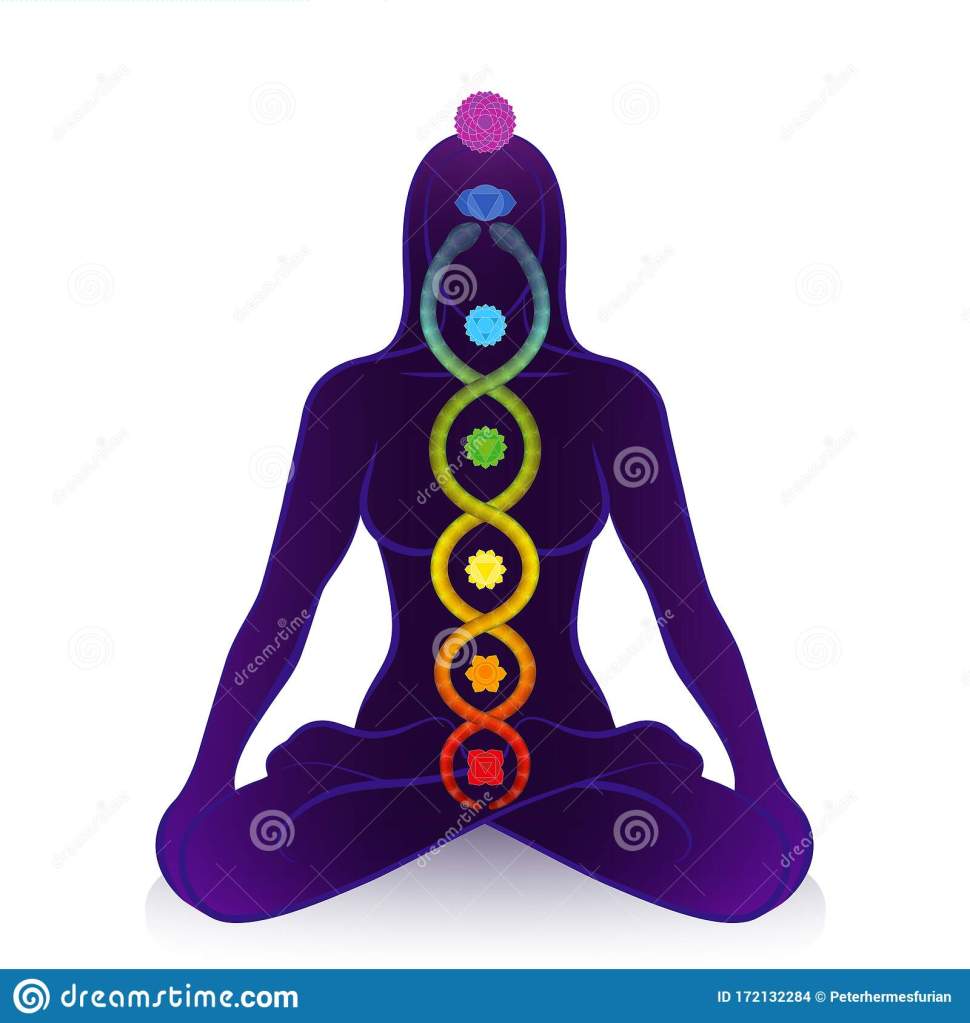
Kundalini – Kundalinī is the feminine form of the Sanskrit adjective meaning “circular” or “coiled.” In yoga, the word applies to the life force that lies like a coiled serpent at the base of the spine and that can be sent along the spine to the head through prescribed postures and exercises. On the way, the kundalini passes through six chakras, or points of physical or spiritual energy in the human body. At the seventh chakra, the yogi is said to experience enlightenment.

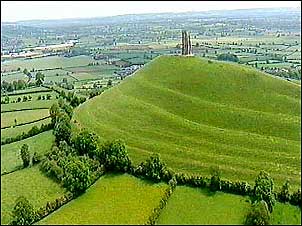
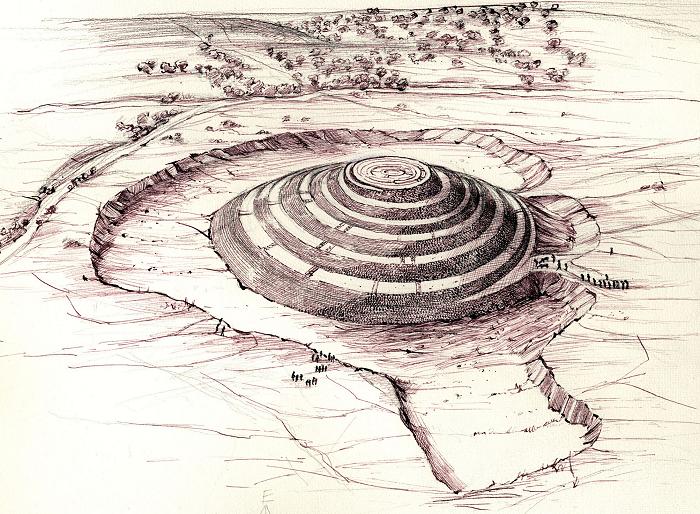
Glastonbury Tor – a very special place to me… has a 7 circuit spiral path from the base to the top. As did the earthworks at Sillbury Hill.  The historian Ronald Hutton  mentions the possibility that the terraces are the remains of a medieval “spiral walkway” created for pilgrims to reach the church on the summit.

The spiral can also be seen as a symbol of interconnectedness, Its steady flow in and out creating a sense of balance.

This is truly a motif that could inspire me to eternity. ( And dont get me started on triple spiral, we will save them for later!) I hope that this has started some ideas swirling in your creative mind and that you will take it to the page this month!

The eyes have it: the Art Elements theme reveal

“The real voyage of discovery consists not in seeking new landscapes, but in having new eyes.” – Marcel Proust

Eyes: Lisa Peters, Joan Miller, Diane Hawkey, Laney Mead,
Andrew Thornton, Peacock Beads

Thank you Laney for such an inspiring theme this month – and World Sight Day on October 12th! As you can see from the photo above – I had a plethora of pretties from which to choose. And yet – it is halloween month – and this happened:

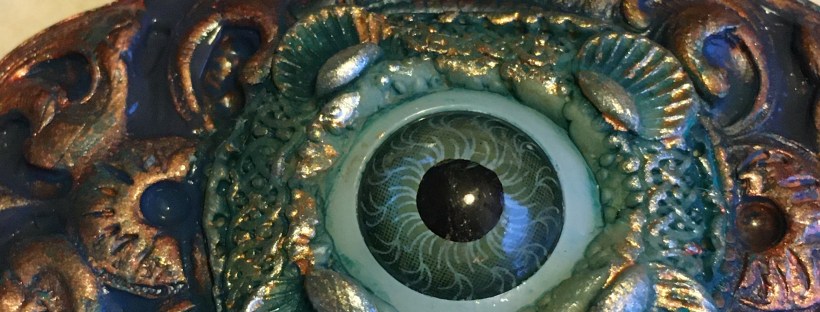
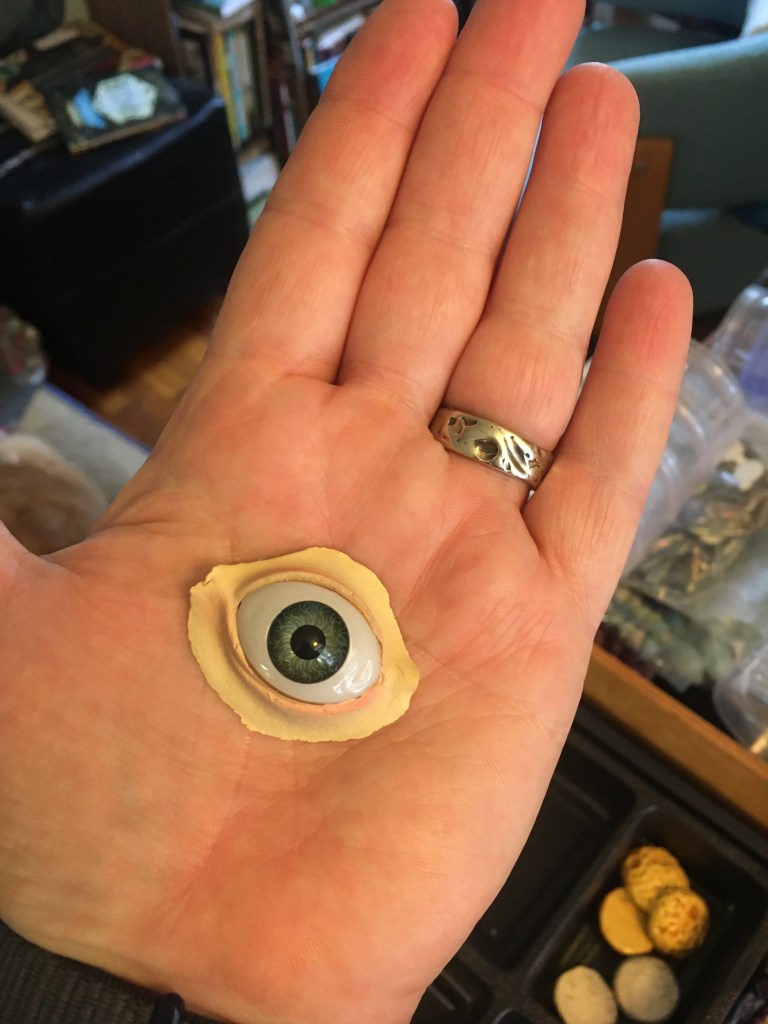
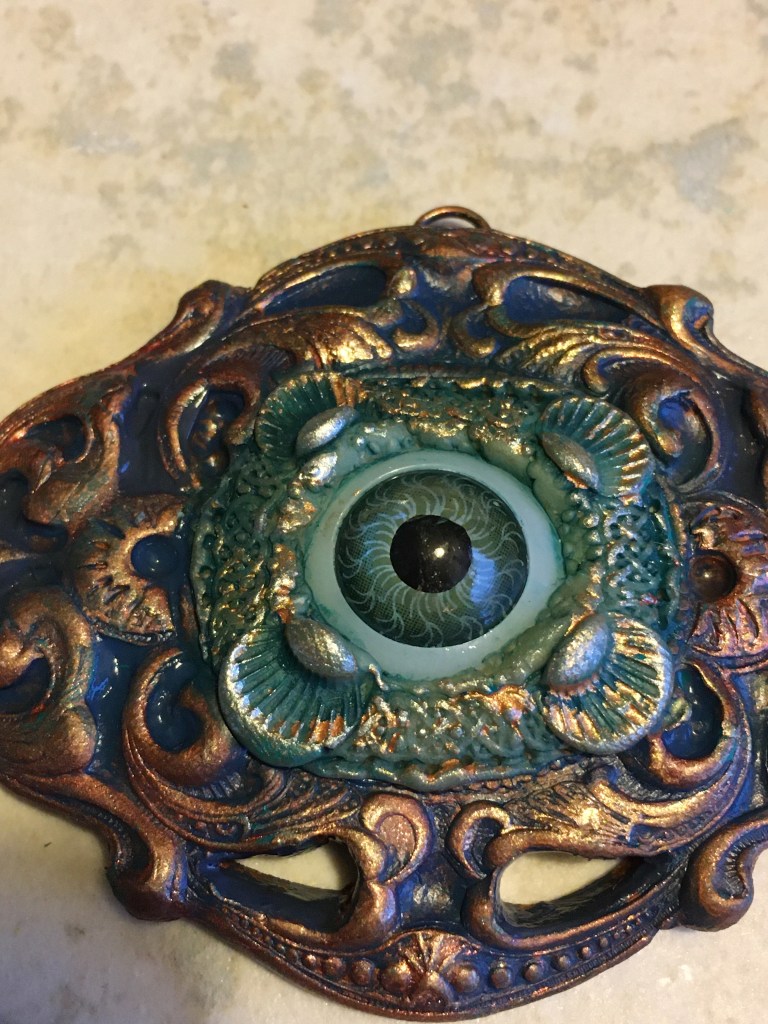
So my $3 plastic eyeball – plastic. Hmm. I cannot set it in polymer. I wanted to go with something ornate, maybe a bit Victorian, and a bit Gothic. I used the polymer piece I was imagining – and then after curing it, set the eyeball. The bezel is Apoxie clay. Acrylic paint to bring out the texture… ( Now I think I want to do another with Swellegant and crusty patinas… )

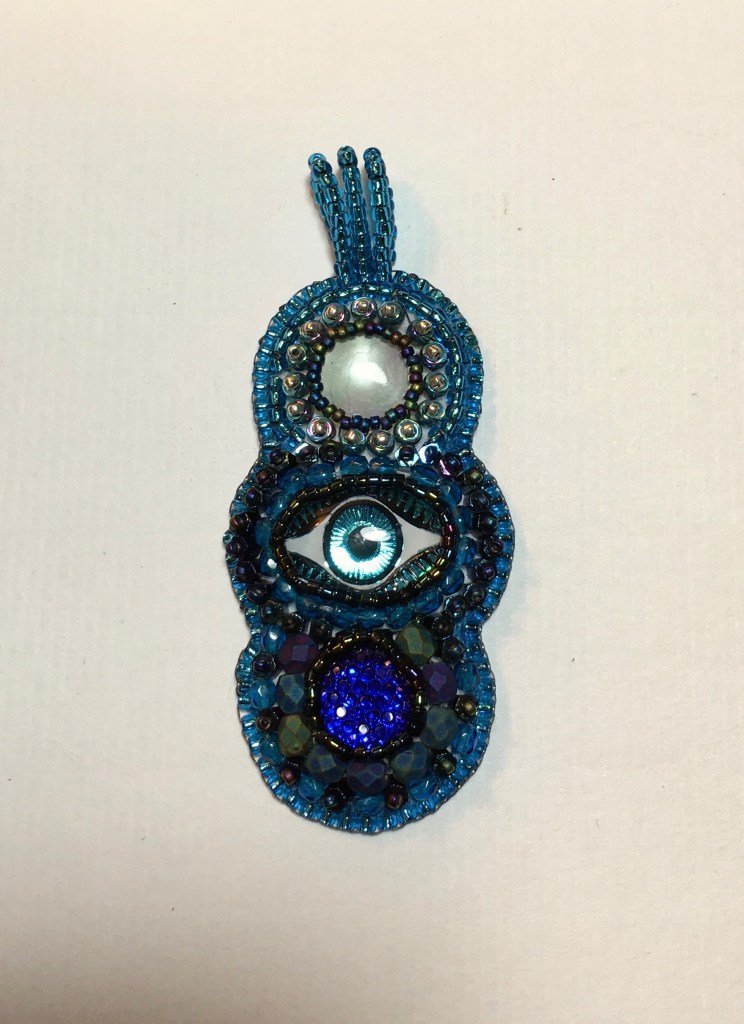
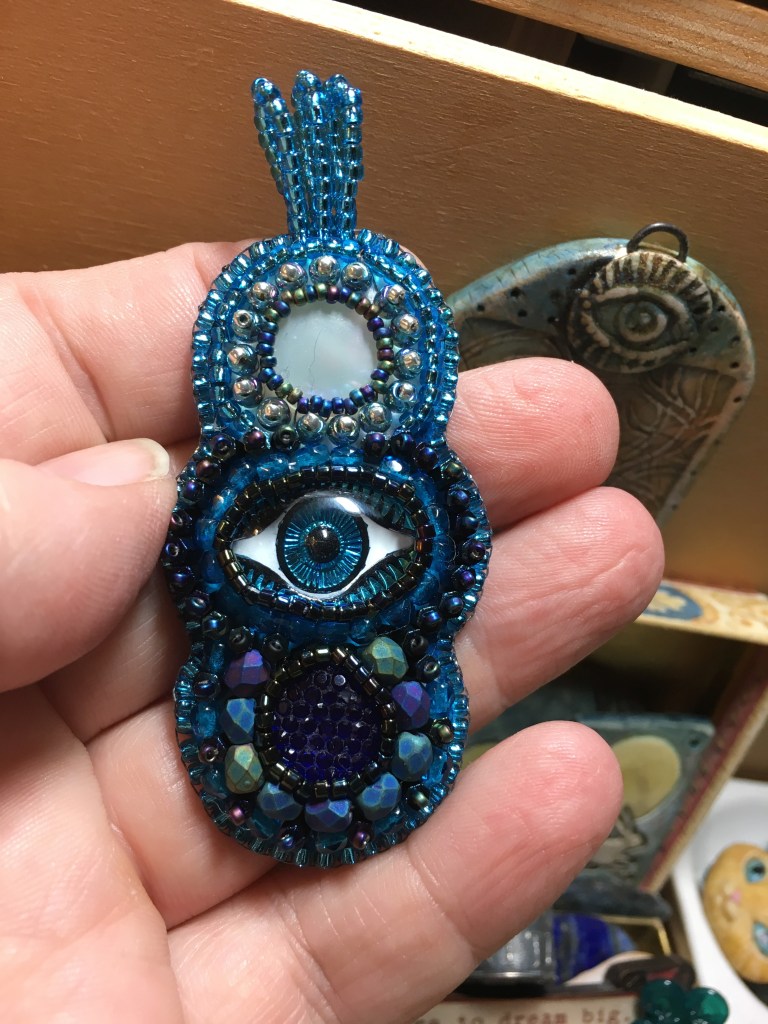
The next 2 pieces are based around very bling-y eye cabs by Megan of Peacock Bead Shop. The first – in turquoise and cobalt was near impossible to photograph. The top cab is mother of pearl. The bottom is a faceted plastic? that shines like a bike reflector in person! Things have been really hectic this month with travel and teaching and shows… so it was a necessary Zen moment to sit and bead on these eyes!

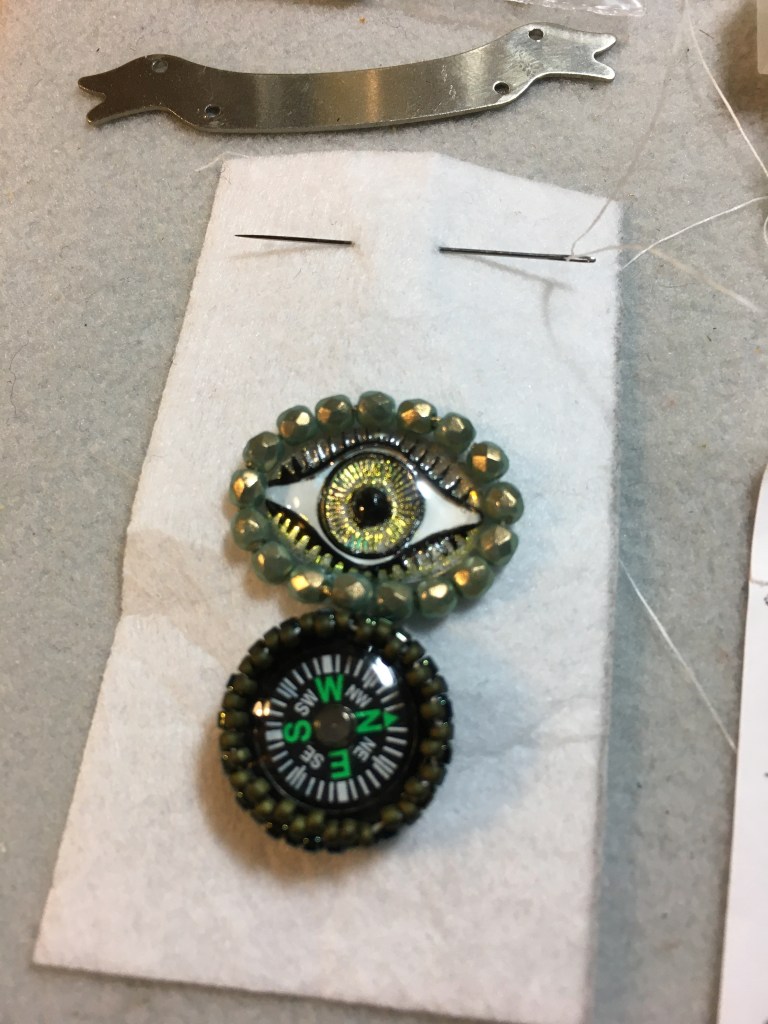
The second piece will be for me! I was playing with different quotes and layers of meaning, thinking on seeing is believing, trust your path, envision your future, manifestation… so the compass was my first choice. I am thinking of hanging the beaded piece off the sterling banner – and stamping it with…? Latin? Welsh? I do like an obscure hidden meaning in a talisman. Or do I repeat the circular motif and dangle the “soul” charm? What, dear reader, would YOU do?

“Your vision will become clear only when you can look into your own heart. Who looks outside, dreams; who looks inside, awakes.” – Carl Jung

I look forward to hearing your thoughts! And before you leave – make sure to click through – it is a blog hop after all!

AE Team

Susan  

Marsha  

Claire  

Cathy 

Jenny  

Niky  

Laney

Guests

Dawn  

Hope  

Beth & Evie  

Kathy  

Michelle 

Tammy    

Cat 

 Elaine

Flowers – the Art Elements theme challenge for July

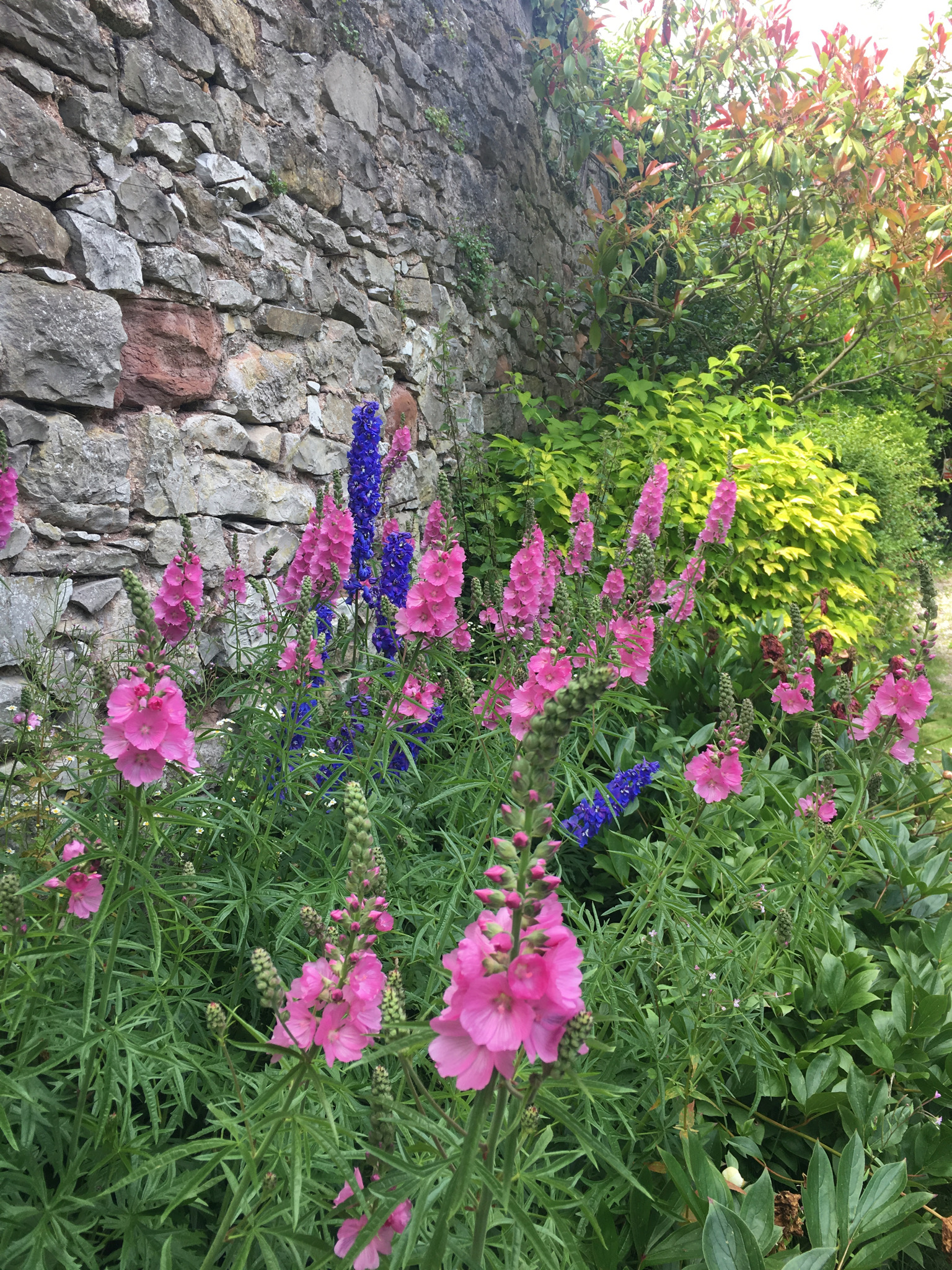
I left for Wales as the month began… on a trip with family that was part heritage tour and part vacation. ( In depth Wales posts are coming shortly.) I kept flowers in my mind as I was touring castles, exploring old seaside villages, hiking in the national parks…. It was an amazing transformative trip, and I will be feeling and seeing the creative effects of it for a long time coming.

But after returning home, and catching up on sleep, laundry, household chores… there was very little of July left for me. I offer you some works in progress for this month – inspired by the theme.

The first showcases these vintage glass pieces. I do not know anything about their original purpose – but when I saw them – I saw frames. ( Sadly there was a blue one too. The set of 4 made me think – 4 elements. I was only able to procure these three.) They have no holes or fasteners/bails of any kind. What do you think they were?

After sorting through many folders of vintage and antique papers ( did you see my post on my paper class with Keith LoBue?) I found some images in the right scale. Two were antique cigarette cards, the other an image from children’s illustrated encyclopedia. ( Yes – mine form my early childhood) I added gesso to the images outside the window area to cloud the colors – I didn’t want them showing through the glass.

Above you can see the copper piece engineered to fit the glass. I had not picked up the jewelry saw in months? a year? and it was so wonderful to be back at the bench pin! Below you can see the piece assembled – well, how it will be.

Currently – the images are drying – a coat of Diamond glaze to protect them. And the copper is in the tumbler – left bright, no patina. I plan to add 3 jump rings from the top arch/bail to add the connection point, and a little movement.

These pieces – when done – will be available for purchase at Bead Fest!

I have missed seed beading in all my travels this month – so I prepared a bead piece, wanting to sit and chill and bead. Well, you can see how far I got:

Labradorite and Lisa Peters cab. Waiting patiently on the bead table.

I hope you have had a wonderful July – whether you traveled or not…

For now – please enjoy a bit of armchair travel as you visit the blogs of my team mates and our guests. Thank you Marsha for a fertile theme, where I am sure many ideas have taken root !
Here is a list of our Visiting Artists:
Alysen
Cat
Divya
Evie and Beth
Jill
Hope
Kathy
Linda
Louise
Martha
Melissa
Michelle
Rozantia
Sarah
Sarajo
Tammy

And our Art Elements Blog Contributors:
Caroline
Cathy
Claire
Jenny ( you are here)
Laney
Lesley
Marsha
Susan